Hyperbaric oxygen therapy, usually shortened to HBOT, has gone from a niche hospital treatment to something you'll see in recovery studios, elite sports facilities and even people's homes. Searches for "what is hyperbaric oxygen therapy" in Australia have more than doubled over the past year.
This guide explains what HBOT is, how it works, the difference between medical and "mild" hyperbaric, where it's used in Australia, and what you should know before trying it.
Hyperbaric oxygen therapy in one sentence
HBOT means breathing concentrated oxygen while you're inside a chamber where the air pressure is higher than normal.
That's it. "Hyper" means above, "baric" relates to pressure, and the oxygen part is the concentrated oxygen you breathe. The combination of the two is what makes HBOT different from simply breathing oxygen through a mask at home.
How does HBOT work?
Step 1: The pressure goes up
Inside a hyperbaric chamber, the air pressure is raised above the normal pressure at sea level. Pressure is measured in ATA (atmospheres absolute), where 1.0 ATA is normal. Mild hyperbaric chambers usually run at 1.3 to 1.5 ATA. Hospital chambers and many hard-shell chambers run at 2.0 ATA or more. At 2.0 ATA, you're at the same pressure as a diver about 10 metres underwater. Our guide to what ATA means covers this in more detail.
Step 2: You breathe concentrated oxygen
Normal air is about 21% oxygen. During HBOT you breathe a much higher concentration, typically around 90% to 100% depending on the setting, through a mask, hood or headset, or from the air in the chamber itself.
Step 3: More oxygen dissolves into your blood
Most of the oxygen in your blood is carried by haemoglobin in red blood cells, and at sea level that's already close to full. But a small amount of oxygen also dissolves directly into plasma, the liquid part of your blood. Henry's law says the amount of gas that dissolves in a liquid rises with its partial pressure. Raise the pressure and the oxygen concentration together, and far more oxygen dissolves into the plasma than normal.
Breathing about 93% oxygen at 2.0 ATA gives an oxygen partial pressure roughly nine times higher than breathing air at sea level. You can see how the numbers change with pressure on our interactive How it works chart.
A very short history
The idea of treating people with pressurised air goes back to 1662, when British physician Nathaniel Henshaw built a sealed, pressurised room he called a "domicilium". Pressurised air chambers became fashionable in Europe in the 1800s. Modern hyperbaric oxygen therapy took shape in the mid-20th century. In 1960, Dutch surgeon Ite Boerema published his famous "life without blood" experiments, showing that at high pressure, enough oxygen could dissolve in plasma to keep animals alive with almost no red blood cells. Navies, including the Royal Australian Navy, have long used hyperbaric chambers to treat divers with decompression sickness.
Medical HBOT vs mild HBOT
This is the most important distinction to understand, because the two are often blurred together online.
| Medical HBOT | Mild HBOT | |
|---|---|---|
| Where | Hospital hyperbaric medicine units | Wellness clinics, recovery studios, homes |
| Typical pressure | 2.0 to 2.8 ATA, sometimes higher | 1.3 to 1.5 ATA (some chambers up to 2.0) |
| Oxygen | Close to 100%, via hood or mask | About 90% to 95% from a concentrator |
| Supervision | Hyperbaric physicians and trained staff | Clinic staff, or self-operated at home |
| Purpose | Treating specific medical conditions | Wellness, relaxation and recovery routines |
What is medical hyperbaric oxygen therapy used for?
The Undersea and Hyperbaric Medical Society (UHMS), the leading international body in hyperbaric medicine, maintains a list of accepted indications. Its current list includes:
- Air or gas embolism
- Carbon monoxide poisoning
- Decompression sickness ("the bends")
- Gas gangrene and necrotising soft tissue infections
- Crush injuries and other acute traumatic reductions in blood flow
- Selected problem wounds, such as some diabetic foot wounds
- Delayed radiation injury to soft tissue and bone
- Compromised skin grafts and flaps
- Refractory osteomyelitis (a persistent bone infection)
- Severe anaemia
- Intracranial abscess
- Acute thermal burns
- Central retinal artery occlusion
- Sudden sensorineural hearing loss
- Avascular necrosis
These are treated in hospital hyperbaric units under medical supervision. A home or wellness chamber is not a substitute for medical treatment of any of these conditions.
Where is HBOT available in Australia?
Hospital hyperbaric units
Australia has hospital hyperbaric medicine units in every state and the Northern Territory, including:
- NSW: Prince of Wales Hospital, Randwick
- Victoria: The Alfred, Melbourne
- Queensland: Royal Brisbane and Women's Hospital, the Wesley Centre for Hyperbaric Medicine in Brisbane, and Townsville University Hospital
- South Australia: Royal Adelaide Hospital
- Western Australia: Fiona Stanley Hospital, Murdoch
- Tasmania: Royal Hobart Hospital
- Northern Territory: Royal Darwin Hospital
The Royal Australian Navy also operates submarine and underwater medicine units in Sydney and Western Australia. Medicare includes items for hyperbaric oxygen therapy for specified conditions in comprehensive hyperbaric facilities.
Wellness and recovery clinics
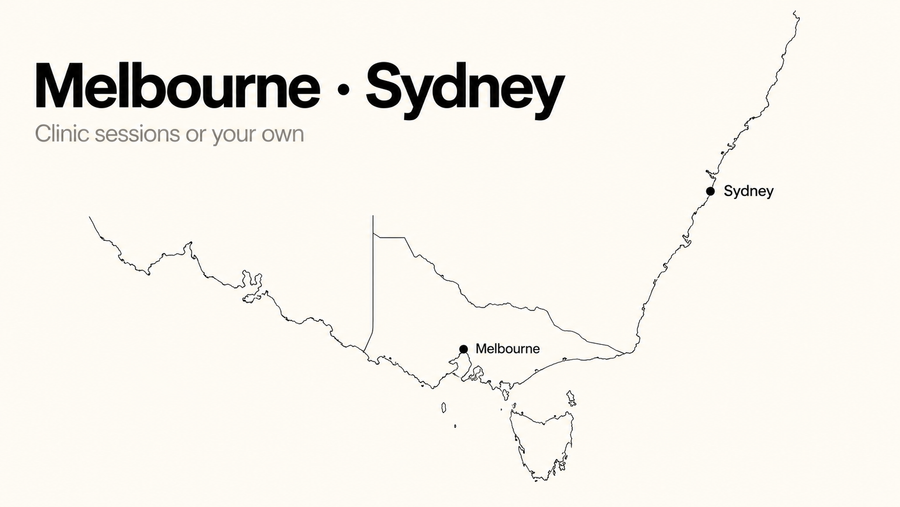
Mild HBOT is offered at a growing number of recovery studios and wellness centres, particularly in Melbourne, Sydney, Brisbane and the Gold Coast. Sessions typically cost somewhere between $40 and $250. See our guide to hyperbaric chambers in Melbourne and Sydney.
At home
Personal hyperbaric chambers, usually soft chambers at 1.3 to 1.5 ATA and some hard shells at up to 2.0 ATA, are now sold in Australia for home use. Read our personal hyperbaric chamber buyer's guide.
What happens during an HBOT session?
- Settle in. You lie down or sit in the chamber and fit your mask or headset.
- Pressurise. The pressure rises gradually over several minutes. Your ears feel full and you equalise them by swallowing or yawning, just like on a plane.
- Breathe and relax. At pressure, you breathe normally and rest, read or listen to something. Medical sessions may include short "air breaks".
- Return to normal. The pressure comes down slowly, your ears adjust again, and you step out.
A session usually lasts 60 to 90 minutes. Medical HBOT sessions can run longer. Our guide to your first hyperbaric session covers what to wear and how to stay comfortable.
Is hyperbaric oxygen therapy safe?
When it's done properly, with appropriate screening and equipment, HBOT is generally well tolerated. The most common issue is ear discomfort from pressure changes, which equalising usually manages. Less common effects can include sinus discomfort, temporary changes in vision after long courses of treatment, and, at higher medical pressures, rare but serious effects such as oxygen toxicity seizures, which is one reason high-pressure treatment happens under medical supervision.
Speak with a qualified health professional before using a hyperbaric chamber if you:
- are pregnant
- have a cold, sinus problem, ear problem, or recent ear surgery
- have a lung condition, or have ever had a collapsed lung (an untreated collapsed lung is a recognised reason not to have HBOT)
- have epilepsy or a seizure disorder
- have had recent surgery or have an implanted device
- are unsure whether pressure is right for you
Concentrated oxygen also makes things burn more easily, so chambers and oxygen equipment must be kept away from flames, heaters and aerosols.
Frequently asked questions
What does HBOT stand for?
Hyperbaric oxygen therapy. You'll also see it written as HBO, HBO2 or HBOT therapy.
What does a hyperbaric chamber do?
It raises the air pressure around you so that, while you breathe concentrated oxygen, more oxygen dissolves into your blood plasma than it would at normal pressure.
Is HBOT the same as an oxygen bar or oxygen mask?
No. Breathing oxygen at normal pressure raises your oxygen levels only a little, because haemoglobin is already nearly full. The extra pressure in a hyperbaric chamber is what allows much more oxygen to dissolve in plasma.
How long is a hyperbaric session?
Usually 60 to 90 minutes, including pressurising and depressurising.
Do you need a referral for HBOT?
For medical HBOT at a hospital hyperbaric unit, yes, you'll need a referral from a doctor. Wellness sessions at private clinics generally don't require a referral, though a health screening is common and sensible.
The bottom line
Hyperbaric oxygen therapy is simple in principle: higher pressure plus concentrated oxygen means more oxygen in your blood plasma. Medical HBOT treats a defined list of conditions in hospital units. Mild HBOT in clinics and homes is used as part of wellness and recovery routines. Knowing the difference is the first step to using it well.
Want to see how it works in a chamber? Explore How it works or compare our chambers.
General information only, not medical advice. Speak with a qualified health professional about your own circumstances.