91%
Better sleep
Deep & REM sleep per night: up steeply, then held
Average nightly deep and REM sleep reported across a course of 60 sessions. Most of the change came in the first 20 sessions.
How it works
What a chamber actually does, what happens in a session and how to choose the right one. Plain English, no hype.
The science
Two things happen at once: the air pressure around you rises, and you breathe concentrated oxygen. Together, they let your blood carry far more oxygen than breathing normal air.
The chamber seals and fills with air until it reaches its set pressure, usually 1.3 to 2.0 ATA. At 2.0 ATA you're at the same pressure as a diver 10 metres underwater.
An oxygen concentrator supplies around 90 to 93% oxygen through a mask or headset. Normal air is 21% oxygen.
Normally almost all the oxygen in your blood rides on red blood cells. Under pressure, extra oxygen dissolves straight into the plasma, the fluid part of your blood. This is Henry's law.
Plasma flows through even the smallest blood vessels, carrying that extra oxygen through your body.
Oxygen pressure you breathe, compared with normal air at sea level. Drag the slider or hover the chart.
Physics illustration: oxygen partial pressure = pressure × oxygen fraction (air 21%, mask oxygen ~93%). Dissolved oxygen in plasma rises with partial pressure (Henry’s law). Not a measure of health outcomes.
Your session
Every session follows the same simple shape. You're in control the whole time, with controls inside the chamber.
Example 60-minute session. Times and pressure vary by chamber and program.
Get comfortable lying down or seated, close the chamber and fit your oxygen mask or headset. Loose cotton clothing is best.
Pressure builds gradually. Your ears feel full, like a plane coming in to land. Swallow, yawn or gently blow with your nose pinched to equalise.
Breathe normally through your mask. Read, listen to music, watch TV in the seated hard shells, or simply rest.
Pressure comes down slowly and your ears adjust again. Once it's back to normal, open the chamber and step out.
Self-reported results from clients of our UK sister company, Oxydise, after a course of hyperbaric sessions.
91%
Deep & REM sleep per night: up steeply, then held
Average nightly deep and REM sleep reported across a course of 60 sessions. Most of the change came in the first 20 sessions.
88%
Self-rated daily energy, 1–10
Clients rated their daily energy on a 1–10 scale. The average rose from 4 to 8 by session 60.
87%
Days a week feeling good
Sessions 1–7
Sessions 54–60
Good days per week went from about 2 in the first week of sessions to about 6 by the final week.
82%
Self-rated pain, 0–10
Self-rated pain on a 0–10 scale fell on average from 6 to 3 over the course.
89%
Readiness score, tracked with an Oura ring
Session 1
Session 30
Session 60
Less downtime after training or events, with readiness climbing as sessions add up
Clients wearing an Oura ring saw average readiness scores rise from 68 to 91 across 60 sessions.
84%
Average nightly HRV: higher means calmer
Average nightly heart-rate variability rose from around 31 ms to the mid-50s, a sign of a calmer nervous system.
Data self-reported by clients after a course of HBOT sessions. Curves show the average trend. Individual results vary and are not guaranteed.
Soft vs hard
Both raise the pressure and deliver concentrated oxygen. The difference is the shell, the pressure range and how they fit your space.
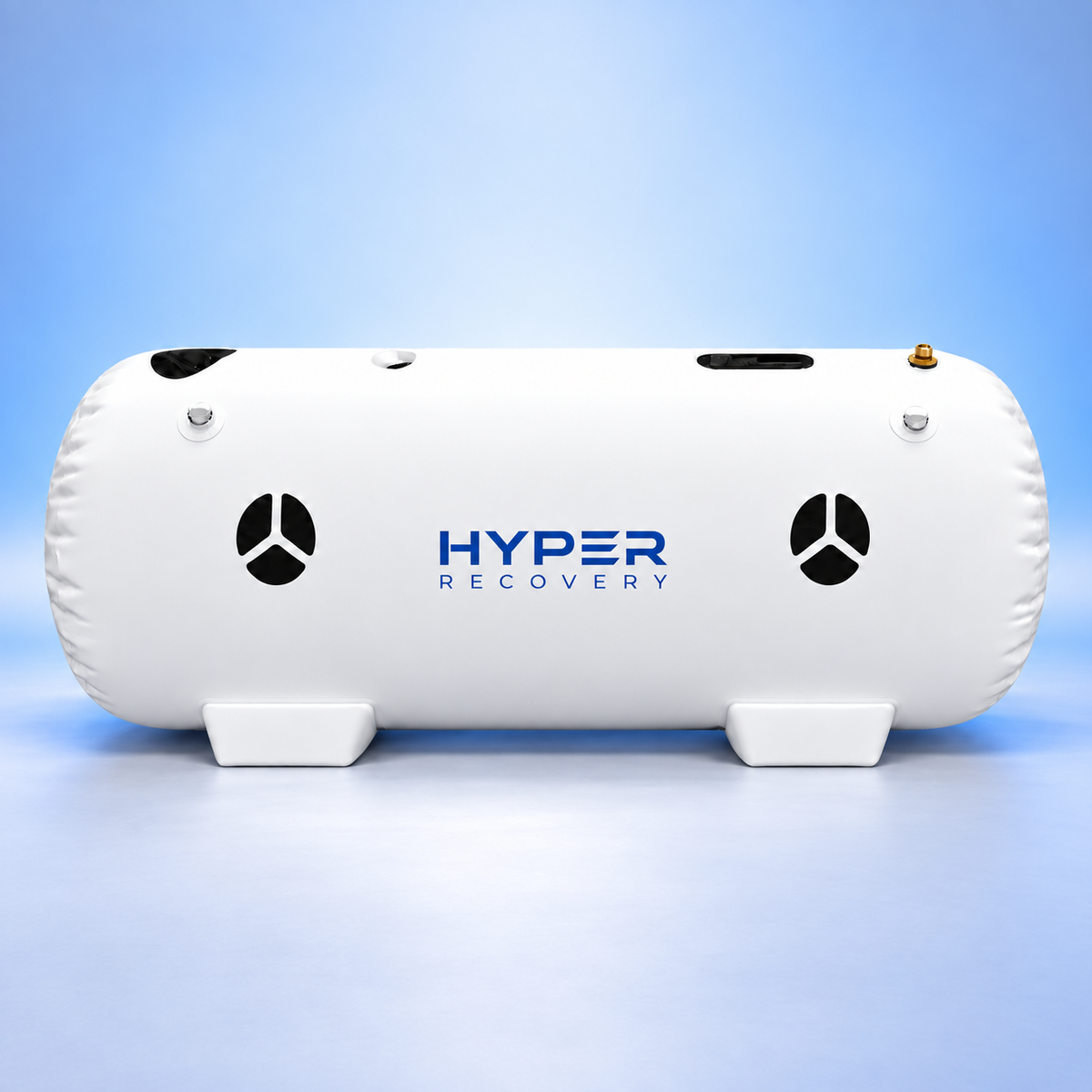
Soft chambers
Flexible, zip-sealed chambers that fit in a spare room and run from a standard power point. Made for home routines.
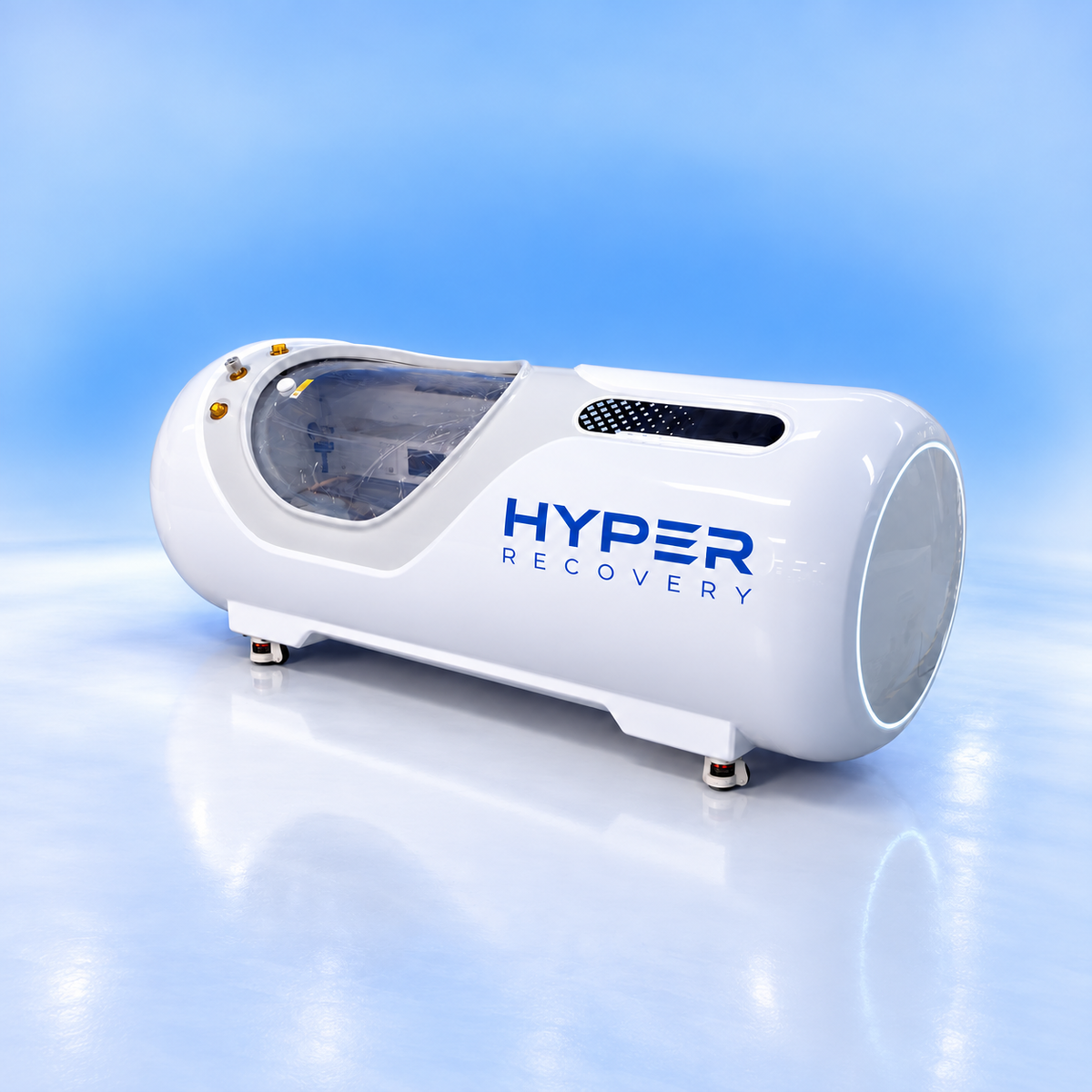
Hard-shell chambers
Rigid composite, steel or aluminium chambers with touch-screen controls, air conditioning and built-in breathing masks. Built for clinics, gyms and premium homes.
Safety
Every chamber is built around controlled pressure and easy controls, and a few common-sense rules keep every session comfortable.
General information only, not medical advice. Speak with a qualified health professional about your own circumstances.
Medical hyperbaric oxygen therapy happens in hospital chambers, usually at 2.0 to 3.0 ATA under medical supervision. Mild hyperbaric usually means 1.3 to 1.5 ATA in a soft chamber for home and wellness use. Our hard-shell chambers reach 2.0 ATA for clinics, gyms and premium homes.
Most sessions run 60 to 90 minutes, including pressurising and returning to normal pressure.
Routines vary. Many owners use theirs several times a week. A qualified health professional can advise on what suits you.
No. The main thing you'll notice is fullness in your ears as the pressure builds, like a plane landing. Equalising your ears keeps it comfortable.
Soft chambers have clear windows, and the seated hard shells have large doors and windows. You control the session from inside and can stop at any time.
Yes. Every HyperRecovery chamber comes with its oxygen and pressure equipment, so it's ready to use on delivery.
Many people nap during sessions. Follow your chamber's manual for session length and supervision.
Learn
Where to find hyperbaric oxygen therapy in Melbourne and Sydney, what sessions cost, what to ask a clinic, and what to know...
HBOT explained without jargon: what happens inside a hyperbaric chamber, the difference between medical and mild HBOT, and where it's used in...
Four of the most popular recovery tools, side by side: how each one works, what a session involves, what it costs in...
Australia-wide delivery
Door-to-door delivery and practical support across Australia.


Straight answers on the right chamber and setup for your space.
Our team can help you compare the options and understand what may suit your home, clinic or recovery space.
Call HyperRecovery Available 8am to 8pm AEST 0490 769 027 Email us
Chamber Match. A one-minute guide to the right chamber for your space and routine.
Chamber Match
Five short questions about how you train, where it will live and what you want to spend. We’ll recommend the right HyperRecovery chamber for you.
Your recommendation is ready
Enter your details to reveal the chamber that suits you. We’ll also send a few considered notes on choosing and setting up a chamber.